


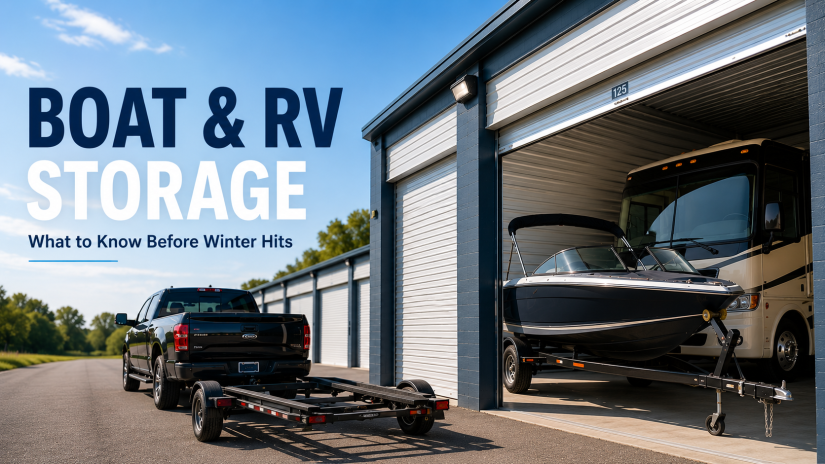


How to Store Your Boat or RV in Wisconsin Over Winter | Lakestone Storage
June is the last time most people want to think about winter storage. But if you're on Lake Ripley or Rock Lake every weekend right now, October gets here fast and the people scrambling for a unit in late fall are always the ones who assumed they'd figure it out later.
When to Move Your Boat or RV Into Winter Storage"
Timing in Southern Wisconsin
Southern Wisconsin, mid-October is usually the target. Before the first hard freeze, before the roads turn into a problem with a trailer behind you.
Jefferson County Boat Launches
The boat launches around Jefferson County get genuinely congested the last two weeks of October. Everyone waits until the weather forces the issue and then everyone moves at once.
Why Early October Helps
Pull it early in October if you can. You'll have daylight, you won't be rushing, and you'll actually be able to winterize it properly instead of doing it half-right in the cold.
RV Storage Timing
RVs are the same story. Once you're regularly hitting below 35°F at night, your water lines are at risk. Most people in this area are done by early November.
What to Do Before You Store
Boat Prep
Drain everything on the boat. The bilge, the live well, the raw water cooling system. Change the oil before storage — not after — because used oil has combustion byproducts sitting in the engine all winter if you don't.
Fog the engine. Disconnect the battery or hook it to a trickle charger. If your trailer bearings haven't been repacked in a season, do it.
RV Prep
For RVs the list is longer but the principle is the same. Water is what gets you.
Winterize the fresh water system and the water heater. Drain the holding tanks all the way. Clean out the fridge and leave the doors open a crack. Pull out anything that'll freeze or bring in mice. Check your roof seals while the weather's still decent enough to actually do something about it.
Why It Matters
People skip this stuff and then wonder why spring startup costs them $600.
Indoor vs. Outdoor Storage
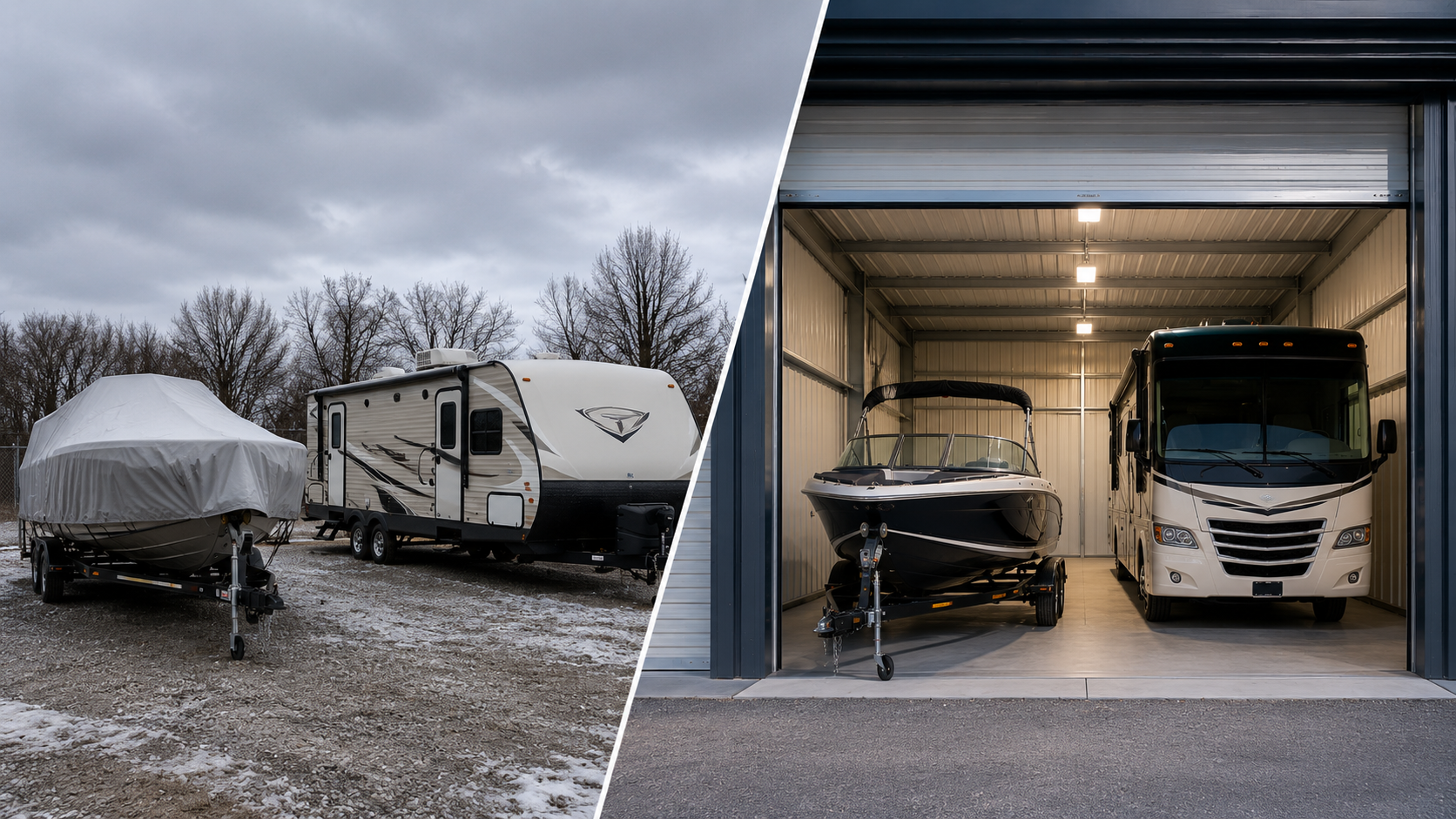
Outdoor Storage
Outdoor storage is cheaper. For a lot of boats and RVs it's also fine, if your cover is solid and you've winterized properly.
What Outdoor Storage Doesn't Protect Against
What it doesn't protect against is UV killing your cover after a couple seasons, a heavy March snowfall sitting on a canvas top, or a bad ice storm making your storage lot inaccessible when you need to get in.
Wisconsin winters vary a lot. Some years are mild. Some years are not.
Indoor Drive-Up Storage
Indoor drive-up storage keeps your cover lasting longer, your exterior finish from oxidizing as fast, and gives you access in February without dealing with a frozen gravel lot.
Why Indoor Storage Makes Sense
For a newer boat or an RV you've put money into, the cost difference over a few years usually makes sense.
What Size Unit Do You Need?
Measure the Full Length
Measure your boat or RV with the motor down and the trailer tongue counted. That number is always longer than people expect.
Fishing Boat Sizes
A 16–18 foot fishing boat on a trailer usually fits in a 10x25.
Pontoon Boat Sizes
A 20–24 foot pontoon typically needs a 12x30 or 12x35.
RV Sizes
Class C motorhomes in the 25–32 foot range need a 12x35 or 12x40 to start.
Full-size Class A coaches often need a 12x45 or 12x50.
Leave Yourself Room
Add at least three feet to whatever your length is. You need room to work at the front and back, and trying to maneuver a 28-foot rig into a 30-foot unit is more frustrating than it sounds.
The 30-Amp Power Thing
Why Power Matters
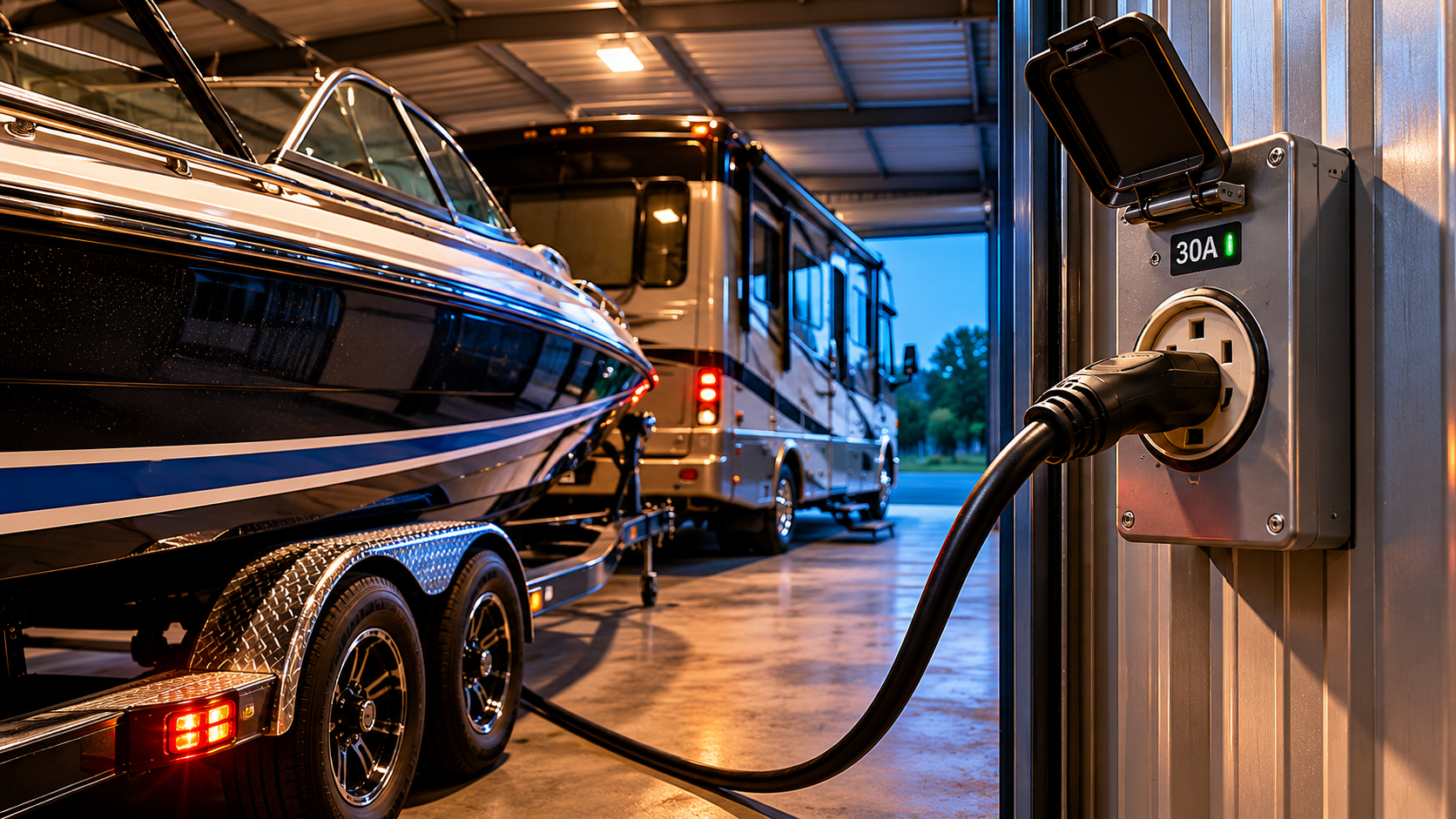
If your boat has electronics or a battery that needs to stay charged, power in your unit matters.
Run a trickle charger all winter without pulling the battery out and hauling it home.
RV Benefits
For RVs it means you can keep house batteries maintained and run a small dehumidifier if you're concerned about moisture.
Power at Lakestone Cambridge
Lakestone's Cambridge location on US-12 has 30-amp power available in select units. It's worth asking about when you reserve because not every facility offers it and you don't want to realize you need it after the fact.
What to Look for in a Facility
Wide Aisles
Wide aisles. Seriously. Turning a 25-foot trailer in a storage facility with tight lanes is a bad time. You want 40 to 60 feet of aisle width to maneuver without white-knuckling it.
Check Your Height
Know your height at the tallest point before you commit to a unit - roof AC units and antennas on RVs catch people off guard.
Lighting and Security
Good lighting matters for the early mornings and late evenings in October and April when you're doing this.
Gated access and cameras are table stakes. Online account access means you're not working around office hours every time you need something.
Storing Near Cambridge and Jefferson County
Convenient Location
If you're on Lake Ripley, Rock Lake, Koshkonong, or anywhere in Jefferson County, Lakestone Cambridge is right on US-12 with easy access from most of the lake communities in the area.
Features at Lakestone Cambridge
Units up to 12x50, wide aisles designed for large vehicles, drive-up access, LED lighting throughout. Ask about our drive-up units with security fencing for reliable protection during storage
Easy Highway Access
It's also a straight shot to I-90/94 so getting your trailer in and out isn't a surface road ordeal.
Reserve Early
Reserve online - no phone call, no waiting for office hours. If you're planning on storing this fall, doing it now means you actually get to pick your unit instead of taking what's left in October.
Lakestone Storage Cambridge
Lakestone Storage Cambridge is at 275 US-12, Cambridge, WI 53523. Serving Cambridge, Deerfield, Marshall, Lake Mills, and Jefferson County.
