


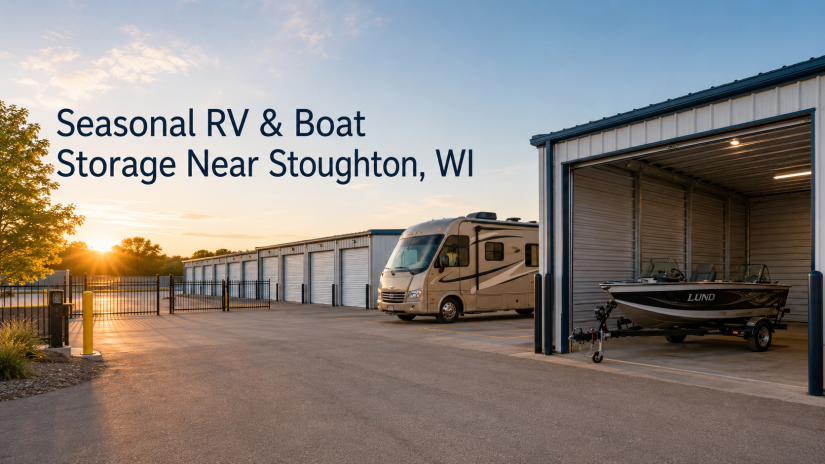


Seasonal RV & Boat Storage for Stoughton Families: Winter Prep Guide
Fall rolls around and the campsite reservations dry up. Your RV has been towed across Wisconsin and parked at two dozen campsites. The boat has been launched a hundred times from the Lake Kegonsa ramp. Both have earned their rest. But winter is coming and parking either one in the driveway for the next five months isn't rest. It's four months of deterioration that spring reveals with an ugly repair bill.
An RV or boat sitting in your driveway all winter takes damage that's both visible and invisible. Freeze thaw cycles crack seals and windows, pop rivets, and delaminate composite materials. Snow load stresses the roof structure and frame. On older canvas canopy rigs, snow can actually cave in the roof. Saltwater and road salt from winter deicing corrode metal hardware, through hulls, the undercarriage, and connections. Inside the cabin, temperature swings create condensation that rots wood trim, feeds mildew growth, and damages upholstery and curtains. The engine fuel gels in extreme cold. Refrigeration coils crack if they're not drained. Plumbing freezes and ruptures. Batteries freeze and die. By spring, you're looking at thousands in repairs and the RV or boat is unreliable until fixed.
Seasonal storage is the practical answer. Your RV and boat go into a gated, monitored facility before the first freeze. They sit protected from snow, salt, and freeze thaw damage for the winter. Come spring, you tow them out ready to use instead of rushed to the shop.
Why Stoughton Families Choose Seasonal RV and Boat Storage
Stoughton is home to a lot of RV and boat owners. Lake Kegonsa access points are right there. Campgrounds across Wisconsin are weekend drives during the season. A lot of families use their RV for fall camping trips and their boat for summer and fall fishing on Kegonsa. By November, everything gets parked.
Parking in your driveway is free in the sense that there's no monthly bill, but it costs thousands in repair bills. Seasonal storage costs $100 to $300 for the winter, typically four months, and insures your RV and boat against tens of thousands in damage. It also keeps your property looking clean and available. An RV parked in the driveway for five months is taking up space, blocking your view of your yard, and making your property look like a storage lot. When it's gone, your yard is yours again.
The month to month structure means you're paying only for the months you actually need storage. Most families store November through March, four months. If the weather stays mild and you decide to camp in October or launch in late April, you adjust without penalty. You're not locked into a fixed winter package that doesn't match your actual timeline.
What Winter Damage Actually Looks Like and How Storage Prevents It
The engine won't start in spring because fuel has gelled and the carburetor or fuel injectors are clogged. The fresh water system has burst pipes from freezing that cost $1,500 to $3,000 to repair. Holding tanks have cracked from expansion, requiring tank replacement that's even more expensive. Seals and gaskets have opened from freeze thaw cycles, letting water into the cabin and creating mold and mildew damage that takes months to fully remediate.
The roof has been stressed by snow load and small leaks have developed. The undercarriage is corroded from salt exposure. The battery is dead from cold. Rodents have nested inside and chewed through wiring insulation. Interior upholstery has developed mold and permanent odor. The propane system has a slow leak that you don't discover until summer when you smell it.
Any one of these problems costs $500 to $2,000 to repair. Combined, they add up to $10,000 to $20,000 in spring damage. Storage for four months costs $400 to $1,200. The math is brutal in one direction and obvious in the other.
Seasonal storage prevents all of that. Your RV or boat sits in a gated, monitored facility instead of exposed in the driveway or a parking lot. It's protected from snow load, salt spray, and freeze thaw damage. Come spring, you pull it out ready to use instead of rushed to the shop.
Winterization: The Essential Work Before Storage
Winterization is the work that prevents damage. Draining all tanks and systems comes first, fresh water, holding tanks, engine cooling system, everything with liquid that can freeze. Fresh water freezes and cracks pipes in ways that are expensive to discover in spring. Holding tanks freeze and expand, cracking the tank itself. Engine coolant freezes and cracks the block. None of these are minor repairs.
Adding fuel stabilizer or draining the fuel tank prevents the gelled fuel and clogged carburetor that won't start the engine in spring. Changing the oil before storage ensures that acidic old oil isn't corroding the engine all winter. Removing the battery or disconnecting the cables prevents parasitic drain and deep discharge that kills a battery in cold. Sealing vents and holes in the undercarriage keeps rodents from nesting inside. Cleaning thoroughly before storage removes the dirt and salt that accelerates corrosion.
For boats specifically, draining the marine head and all plumbing prevents sewage and waste from freezing and cracking tanks. For RVs, winterizing the fresh water system with antifreeze or draining it completely prevents burst pipes. Propane tanks should be off and isolated to prevent leaks. Covers should be breathable, canvas or breathable synthetic, never plastic, which traps condensation underneath. Inside the RV or boat, cabinets and doors should be propped open slightly so air circulates and prevents mildew and odor from building up over months of dormancy.
Outdoor vs. Covered Storage: Making the Right Choice
The choice between outdoor gated parking and covered storage depends on the value of what you're storing and how much protection you want. Outdoor gated parking is significantly cheaper. You get a gated lot, 24 hour camera monitoring, LED lighting, and drive up access. You're not paying for a roof over your head, but you're getting security and deterrence against theft and vandalism. Your RV or boat is visible to cameras and lit up at night, which makes it a less attractive target. The tradeoff is that you're responsible for managing snow accumulation and making sure the cover stays secure during storms.
Covered drive up spaces are more expensive but protect against weather damage. The cover keeps snow off the roof and deck, prevents ice buildup, protects the exterior from direct sun exposure, and generally keeps the RV or boat from being exposed to the elements. High value rigs, new RVs or expensive boats, benefit significantly. The extra cost buys you peace of mind that the exterior and cabin are being protected.
Most Stoughton families choose outdoor gated storage because it's affordable and the RVs and boats are built tough. They've been parked outside all summer and can handle winter as long as they're winterized properly and stored in a monitored facility. The gating and cameras provide security. The cost stays reasonable.
Reserve Seasonal Storage in Stoughton Before Winter Hits
Browse available RV and boat storage at our Stoughton facility, reserve online in minutes, or call (608) 838-1800 and describe your RV or boat. Gated, monitored, drive up access, and month to month flexibility means you're in control. Your RV and boat deserve protection from a Wisconsin winter. Storage gives them that protection while keeping your property clean and your repair bills manageable.
FAQ
How much does seasonal RV and boat storage cost?
Pricing depends on the size of your RV or boat and whether you choose covered or outdoor. Budget $100 to $250/month for the winter season. Check current rates or call for a quote.
What size space do I need?
Measure your RV or boat and call us. Most RVs and boats fit in standard drive up spaces, but extra large units might need extra space. We'll confirm.
Can I access my RV or boat during winter?
Yes, during gate hours. You can visit, check on your rig, grab supplies, or take it out if a warm day tempts you.
Is the facility secure for expensive RVs?
Yes. Gated entry, 24 hour camera monitoring, perimeter fencing, bright LED lighting. Your RV is secure.
What if I need my RV out mid winter?
No problem. Month to month means you can pull it out anytime or extend storage if you need. Flexibility is the whole point.
Do I need to winterize before storage?
Yes. Proper winterization prevents frozen pipes, cracked engines, and mold. See the winterization section above for the full checklist.
