





Temperature Controlled vs. Drive-Up Storage in Wisconsin: Which One Do You Actually Need?
If you're storing wood furniture, electronics, clothing, or anything that can warp, crack, or mildew, temperature controlled storage is worth it. If you're storing tools, lawn equipment, or vehicles, drive-up is usually all you need. Wisconsin winters change the math on this more than people expect.
First, What's the Difference?
Drive-Up Storage
Drive-up units look like oversized garage bays. You back your truck up, roll the door open, and load straight in. No hallways, no carts, no maneuvering a couch around a corner.
Temperature Controlled Storage
Temperature controlled units are inside a building where the air stays regulated year-round, typically somewhere between 50 and 80 degrees with humidity kept in check.
The Main Difference
Both types lock. Both keep your stuff dry. The difference is what happens inside over a Wisconsin winter, and honestly, a Wisconsin summer too.
What "Temperature Controlled" Actually Means
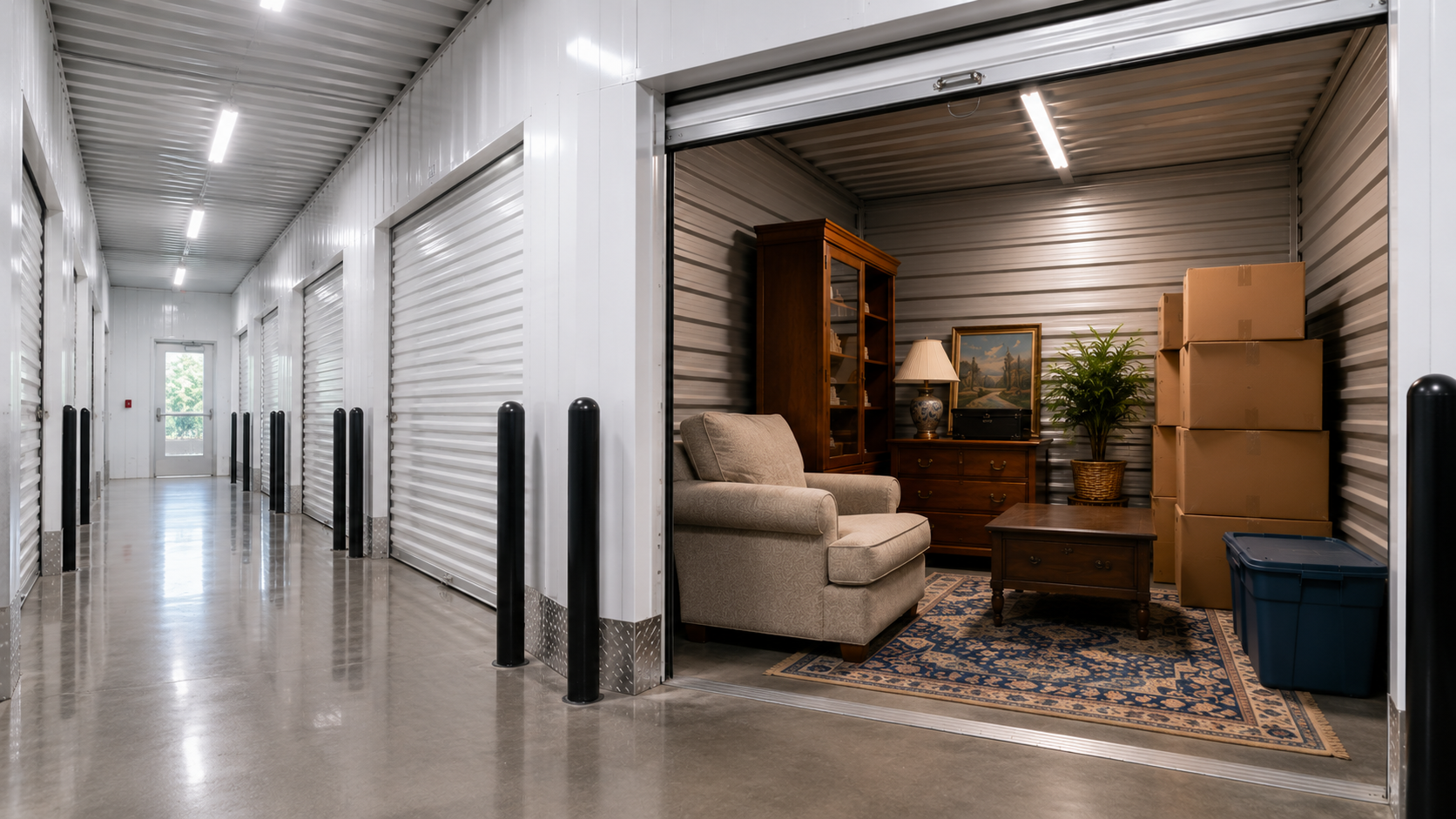
Consistent Temperature and Humidity
You'll see "temperature controlled" and "climate controlled" used interchangeably at most facilities, and they generally mean the same thing: the unit holds a consistent temperature no matter what's happening outside. At Lakestone, our temperature controlled units stay between 50–80°F with humidity between 30–50%.
Why It Matters
That range matters more than people realize. Wood expands and contracts with temperature swings. Electronics develop condensation damage when cold air warms up inside a unit. Leather cracks. Fabric absorbs moisture and picks up that musty smell that never really goes away.
None of that happens when the air inside stays steady, whether it's 5°F in Cambridge in January or pushing 90°F in Sun Prairie in July.
Wisconsin Winters (and Summers) Change the Calculation
Freeze-Thaw Cycles
Most storage advice is written for somewhere with a normal climate. Wisconsin isn't that.
Southern Wisconsin sees 30-degree temperature swings in a single day during spring and fall. A standard drive-up unit in March goes from freezing overnight to above 50 by afternoon, over and over. It's not the cold itself that destroys things, it's that cycle. Freeze, thaw, freeze, thaw.
Summer Heat
Summers cut the other way. A metal storage unit sitting in direct sun in July can hit 130°F inside or higher. That'll warp vinyl records, crack instrument cases, and do a number on anything with a finish or a seal.
If you grew up here, you already know Wisconsin doesn't do mild. Your storage decision should reflect that.
What Belongs in Temperature Controlled Storage
Furniture and Upholstered Items
Wood and upholstered furniture top the list. Dining sets, sofas, and antiques especially.
Electronics
Electronics are a big one too. TVs, computers, gaming systems, and audio gear are all sensitive to the humidity swings that come with an unregulated space.
Clothing and Sensitive Items
Same goes for clothing you actually care about, vintage pieces, leather jackets, and anything in a garment bag. Musical instruments, important documents, photos, artwork, business inventory where the packaging matters, mattresses, and wine if you're storing any.
The Common Thread
The common thread is that these things degrade slowly and quietly. You might not notice until you go to pick them up six months later.
What's Perfectly Fine in Drive-Up Storage
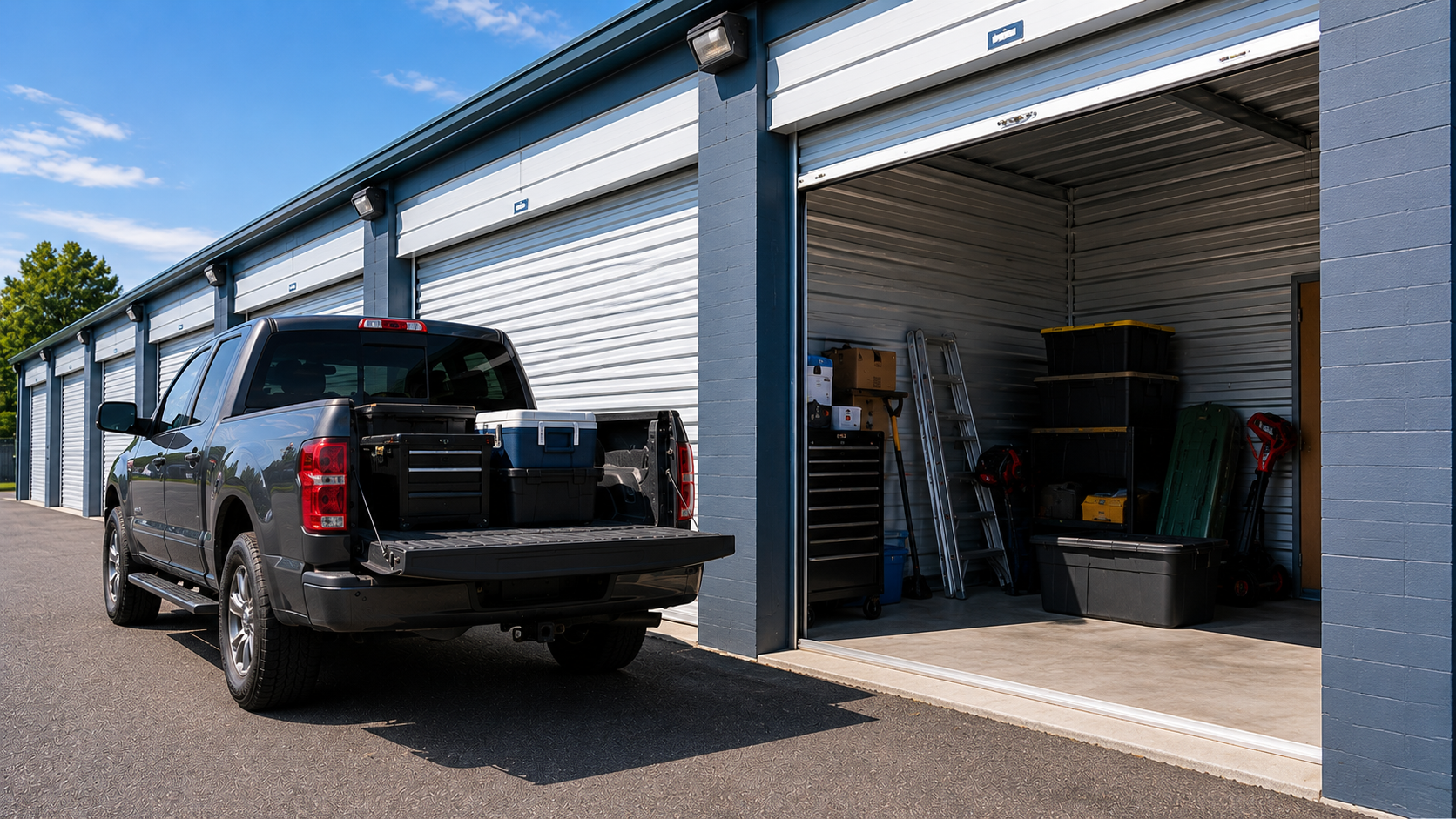
Everyday Storage Items
Drive-up units are genuinely the right choice for most of what people store. They're more affordable, and the direct access makes a real difference when you're dealing with heavy or bulky items.
Lawn mowers, snowblowers, garden tools, seasonal décor and holiday bins are all fine. Bikes, kayaks, paddleboards, tires and auto parts work well too. Construction materials, hardware, appliances in good working shape, boxes of kitchenware, and sporting gear outside of anything with a wood core are all perfectly suited for drive-up storage.
Drive-Up Access at Lakestone
All four Lakestone locations, Cambridge, De Forest, Stoughton, and Sun Prairie, have drive-up access with wide aisles and tall doors. If you're storing anything from that list, you don't need to pay more for temperature control.
What About Heated Storage?
A Middle Ground
Heated storage sits between a standard drive-up unit and full temperature control. It keeps things above freezing through the winter without the full humidity regulation. A solid middle ground if your stuff can handle heat but can't handle a hard freeze.
Heated Units in Sun Prairie
Lakestone's De Forest location offers temperature controlled units, so you have options at a few different price points depending on exactly what you're storing and how long you need it there.
A Note on 30-Amp Power
Why Power Access Matters
If you're storing an RV, a classic car, or anything with a battery that needs a trickle charger over winter, power access matters as much as temperature.
Locations With 30-Amp Power
Cambridge, Stoughton, and Sun Prairie all have 30-amp power available in select units. That means you don't have to drain and disconnect everything just because it's November.
How to Decide
Question 1
Would a Wisconsin winter or summer damage this if it sat in your garage? Yes means temperature controlled. No means drive-up is fine.
Question 2
How often do you need to get in and out? If you're loading and unloading frequently, drive-up access is a real quality-of-life thing, not a small detail.
Question 3
What would it cost to replace what's in the unit? If the answer is significant, the price difference for temperature control usually isn't.
Find the Right Unit at Lakestone
Storage Options Across Southern Wisconsin
Lakestone Storage has four locations across southern Wisconsin, Cambridge, De Forest, Stoughton, and Sun Prairie, with drive-up access at all of them and temperature controlled units where the local demand calls for it. You can check availability and rent online without having to call anyone.
Need Help Choosing?
Not sure what you need? Reach out. We'd rather help you pick the right unit than have you rent the wrong one and find out later.
Lakestone Storage serves Cambridge, De Forest, Stoughton, Sun Prairie, and the surrounding communities across Jefferson, Dane, and Rock counties.
See how your location handles it:
Need temperature control in a specific area? Learn how De Forest families and businesses use temperature-controlled storage to protect valuables, or explore why De Forest's temperature-controlled units are ideal for Wisconsin winters.
