


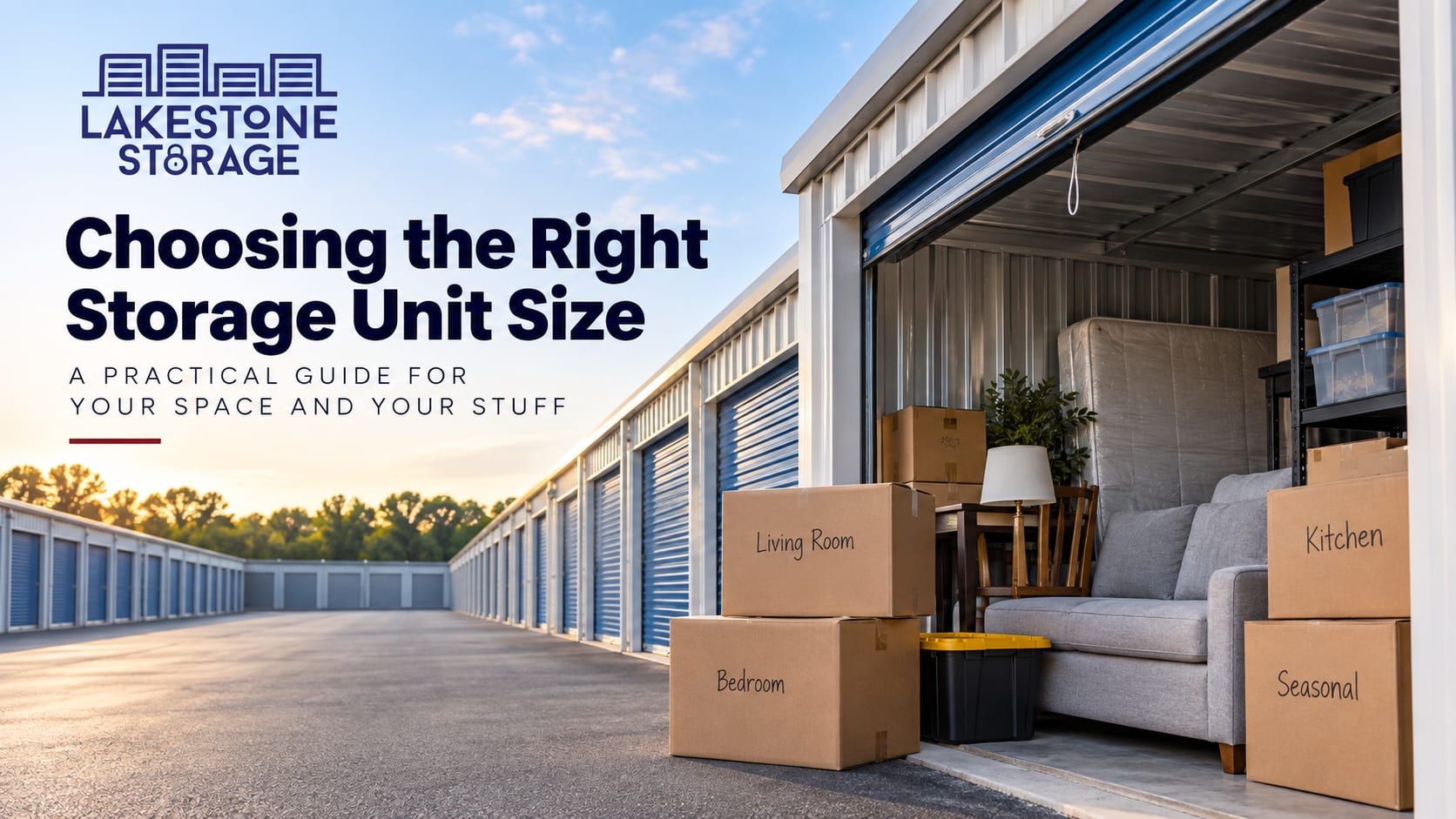
Choosing the Right Storage Unit Size
The Two Ways People Get Sizing Wrong
Almost everyone who has rented storage before has a sizing story, and it usually goes one of two directions. Either the unit was too small and half the load ended up back in the garage, or it was comfortably oversized and the renter spent months paying for square footage that never got used. Both mistakes come from the same root cause: guessing instead of actually counting what needs to go in.
Start With What You Are Actually Storing, Not a Room Count
A common shortcut is sizing by number of bedrooms, a one bedroom apartment needs this size, a three bedroom house needs that size. This works as a rough starting point but breaks down fast once furniture density varies. A one bedroom apartment furnished sparsely stores in less space than a one bedroom crammed with a home office setup, a treadmill, and years of accumulated boxes. A faster inventory, even a rough one, beats a room count every time. Walk through what you are storing and note major furniture pieces, an approximate box count, and anything unusually large or oddly shaped, then size around that.
Small Units: 5x5 and 5x10
A 5x5 unit is close to a small closet, enough for a few boxes, seasonal decorations, or a handful of smaller items. A 5x10 roughly doubles that, fitting a studio apartment's overflow, a small collection of boxes and a couple of smaller furniture pieces, or seasonal gear like patio furniture and holiday decorations.
Medium Units: 10x10 and 10x15
A 10x10 is one of the most commonly rented sizes, and for good reason. It comfortably fits the contents of a one bedroom apartment, a bed frame, a dresser, a couch, a modest number of boxes, without much wasted space. A 10x15 stretches that further, into the range of a two bedroom apartment or a smaller house, particularly when the load includes a dining set or additional furniture beyond the basics.
Large Units: 10x20 and Above
A 10x20 is roughly the footprint of a two car garage and typically covers a three to four bedroom house's furniture, a full living room and dining room set, and a substantial number of boxes. Beyond that, extra large units extending past 10x20 handle full household moves, business inventory at scale, or situations combining household goods with vehicles or equipment.
At a Glance
- A 5x5 unit holds roughly a small closet's worth of boxes and seasonal items; a 10x10 typically covers a one bedroom apartment.
- A 10x15 to 10x20 range generally fits a two to four bedroom household's furniture and boxes.
- Furniture density matters more than room count. A sparsely furnished space needs less room than a similarly sized space packed with belongings.
- When in doubt between two sizes, sizing up slightly is usually the safer and often cheaper mistake than sizing down.
The Cost of Guessing Wrong in Either Direction
Undersizing means either leaving items behind, in which case the storage plan did not solve the original problem, or cramming the unit past a reasonable fill level, which makes retrieving anything a hassle and increases the odds of damaging what is packed at the back. Oversizing is a quieter mistake because nothing visibly goes wrong, you simply pay a higher monthly rate for capacity that sits empty. Over a year, the gap between a correctly sized unit and one size larger adds up to a real, avoidable cost.
When Sizing Up Makes Sense Anyway
There are situations where renting slightly larger than the bare minimum is the right call rather than a mistake. If your storage need is genuinely likely to grow, an ongoing home renovation, a business with seasonal inventory swings, planning for a little extra room avoids the hassle of moving everything to a bigger unit later. If you are combining several categories of items, furniture plus seasonal gear plus a few larger pieces, a little buffer room keeps loading and retrieval manageable rather than requiring a precise, wall to wall fit.
A Simple Way to Estimate Before You Call
Walk through your space room by room and jot down major furniture pieces by name, bed, dresser, couch, dining table, then estimate a box count by category, kitchen, bedroom, general household. Note anything unusually large: a piano, exercise equipment, an armoire. This rough list takes ten to fifteen minutes and gives a much more accurate starting point than trying to estimate square footage in your head.
When to Just Call and Ask
If your situation involves anything nonstandard, combining a household move with business inventory, storing around an unusual item like a boat or a large piece of equipment, or genuine uncertainty about how much you actually have, describing what you are storing over the phone gets a faster and more accurate answer than guessing from a size chart alone. Call (608) 838-1800 and walk through your list, and you will get a size recommendation based on your actual situation rather than an average.
FAQ
What size storage unit do most people rent?
10x10 is among the most commonly rented sizes, generally fitting a one bedroom apartment's furniture and boxes.
Is it better to size up or size down if I am unsure?
Sizing up slightly is usually the safer choice. The cost difference between adjacent sizes is often smaller than the hassle of running out of room or needing to move everything to a larger unit later.
How much does furniture density affect sizing?
Significantly. A room described the same way, one bedroom, a two bedroom house, can need noticeably different unit sizes depending on how much furniture and how many boxes are actually involved.
Can I change unit sizes after I move in?
Storage needs change, and moving to a different size is usually possible depending on availability. Call to check current options if your needs shift after you have moved in.
What is the fastest way to get an accurate size recommendation?
A rough inventory, major furniture pieces plus an approximate box count, described over the phone gets a faster and more accurate answer than estimating from a general size chart alone.