


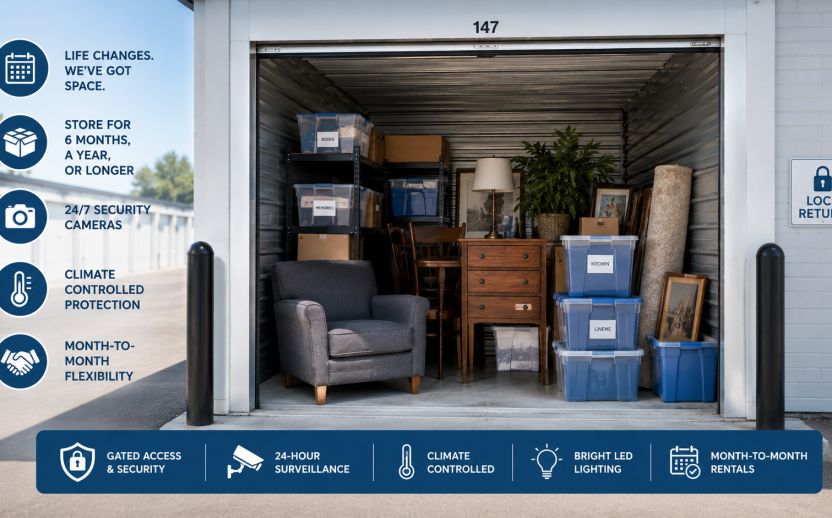
Moving to a smaller place but keeping your furniture. Relocating for a job in six months but starting the new position before your house sells. Waiting for a rental house to become available. Going back to school and storing your apartment's contents over the summer. Life changes happen on timelines that don't fit month to month thinking.
Long term storage is the bridge between "I need space for a few weeks" and "I'm renting my own place." Lakestone Storage has served Wisconsin families and professionals who need secure, stable storage for six months, a year, or longer, without getting locked into a warehouse lease they don't actually need.
Why long term storage is different
Short term storage is about speed: quick move, quick access, quick done. Long term storage is about stability. You're not moving things in and out constantly. You're storing important belongings that need protection, access when you need it, and reliable monthly pricing without surprises.
Climate control becomes critical for long term. If your furniture, documents, electronics, or other valuables sit in an unheated storage unit through a Wisconsin winter, freeze thaw damage adds up. Temperature swings crack wood, condense moisture that feeds mildew, and corrode electronics. Over six months or a year, that damage is real.
Month to month flexibility is essential. You don't know if your job will be confirmed in six months, if the house will sell on schedule, or if your timeline shifts by a few weeks. Lakestone's month to month terms mean you adjust as your life changes, no penalties, no renegotiation, no surprise fees.
Security and monitoring matter. You're storing things that matter to you for a long time. 24 hour cameras, gated access, and bright lighting mean your belongings are monitored, not sitting in a dark lot unattended.
What long term storage actually looks like
Relocation storage
You've accepted a job three states away, but your house won't sell for another eight months. Store your furniture, boxes, and personal items locally while you get settled in the new place. Once the old house sells and closes, move everything or sell it from storage.
Waiting for permanent housing
You're moving to Madison for school or a job, but you're renting an apartment for the first year. Store your real furniture until you buy a house or rent a bigger place. This happens constantly. People downsize their living situation temporarily and store the furniture they're not using now.
Life transitions
Divorce, health issues, caring for a family member. Sometimes you need to pare down your primary living space for a time but aren't ready to commit to permanent decisions. Long term storage gives you time without forcing a choice.
Estate and inheritance storage
A parent passes, and you inherit furniture, artwork, and belongings that matter emotionally but don't fit your current home. You're not discarding it. You're storing it until you figure out what stays, what goes to family, and what you want to keep long term.
Seasonal business overflow
Some businesses need massive storage from October through December (holiday inventory, event gear, gifts), then minimal storage the rest of the year. Long term contracts would waste money; month to month lets you pay for what you actually use.
Protecting your belongings over months
A few practices ensure your stuff comes out in good condition after six months or more:
Climate control is non negotiable
Choose a climate controlled unit if you're storing furniture, electronics, documents, or anything vulnerable to temperature and humidity shifts.
Use proper packing
Plastic totes beat cardboard; they seal, stack, and survive moisture. Label everything clearly so you can find what you need without unpacking everything.
Ventilation matters
Don't pack a unit floor to ceiling. Leave airflow so moisture doesn't collect in pockets. Stack items so air can circulate.
Elevate off the floor
Concrete can sweat, especially after a thaw or during humid seasons. Put boxes and furniture on pallets or shelving.
Cover furniture with breathable cloth, not plastic
Plastic traps condensation; cloth breathes while protecting from dust.
Keep an inventory
Before you close the door, photograph or list what's inside and where it's located. After six months, you'll be grateful you did.
Insurance for long term storage
Stored items must be insured. Check if your homeowner's or renter's insurance covers off site storage. If not, our storage protection plan is affordable and covers your belongings for the duration of your rental.
Choosing the right size for long term
Long term storage means you're not optimizing for a quick move. You're thinking about what you'll actually need when you retrieve it. A 10x10 unit fits most studio/one bedroom contents. A 10x15 or 10x20 handles a full two bedroom apartment or house. We can help you figure out the right size based on what you're storing.
Check our storage unit size guide or call (608) 838-1800 to discuss your situation and get a recommendation.
Move in and move on
Find a climate controlled unit at Cambridge, De Forest, Sun Prairie, or Stoughton, and reserve online in minutes. Month to month, no surprise fees, no long commitment. Your stuff is secure, and you're free to focus on your move, your job, or whatever life change brought you here.
FAQ
Is climate control worth it for long term storage?
Yes. Over six months or a year, temperature swings and humidity damage wood, electronics, and fabrics. Climate control is insurance for your belongings.
How much does climate controlled long term storage cost?
Pricing depends on unit size and location. A 10x10 climate controlled unit runs more than standard, but the protection is worth it. Browse rates or call (608) 838-1800 for a quote.
Can I access my unit whenever I need something?
Yes, during gate hours. You're not locked into specific visit windows. Come when you need to grab something or add to the unit.
What if my timeline changes and I need to move out early?
No penalty. Month to month means you give 15 days' notice and you're done. Your situation changes; your storage should flex with it.
Do I need insurance for long term storage?
Yes, items must be insured. Check if your homeowner's or renter's insurance extends to off site storage. If not, we offer a protection plan.
Can I store furniture long term in a standard (non climate) unit?
Not recommended. Wood cracks, fabrics develop mildew, and electronics corrode. Climate control is inexpensive insurance over six months.
How do I pack for long term storage?
Use plastic totes, label everything, elevate off the floor, leave airflow, and take an inventory photo before you close the door. See our storage tips for details.